HousingAnywhere
Internal operationsFinance B2B WebDesktop Design system

Automating payouts to cut operational costs and reduce errors

  • Spotted a costly manual process while shadowing the finance team;
  • Mapped the checks and decisions;
  • Brought fragmented data from six systems into one;
  • Built trust in automation through a staged rollout;
  • Reduced manual work by 75% and saved the finance team 30 hours per week.
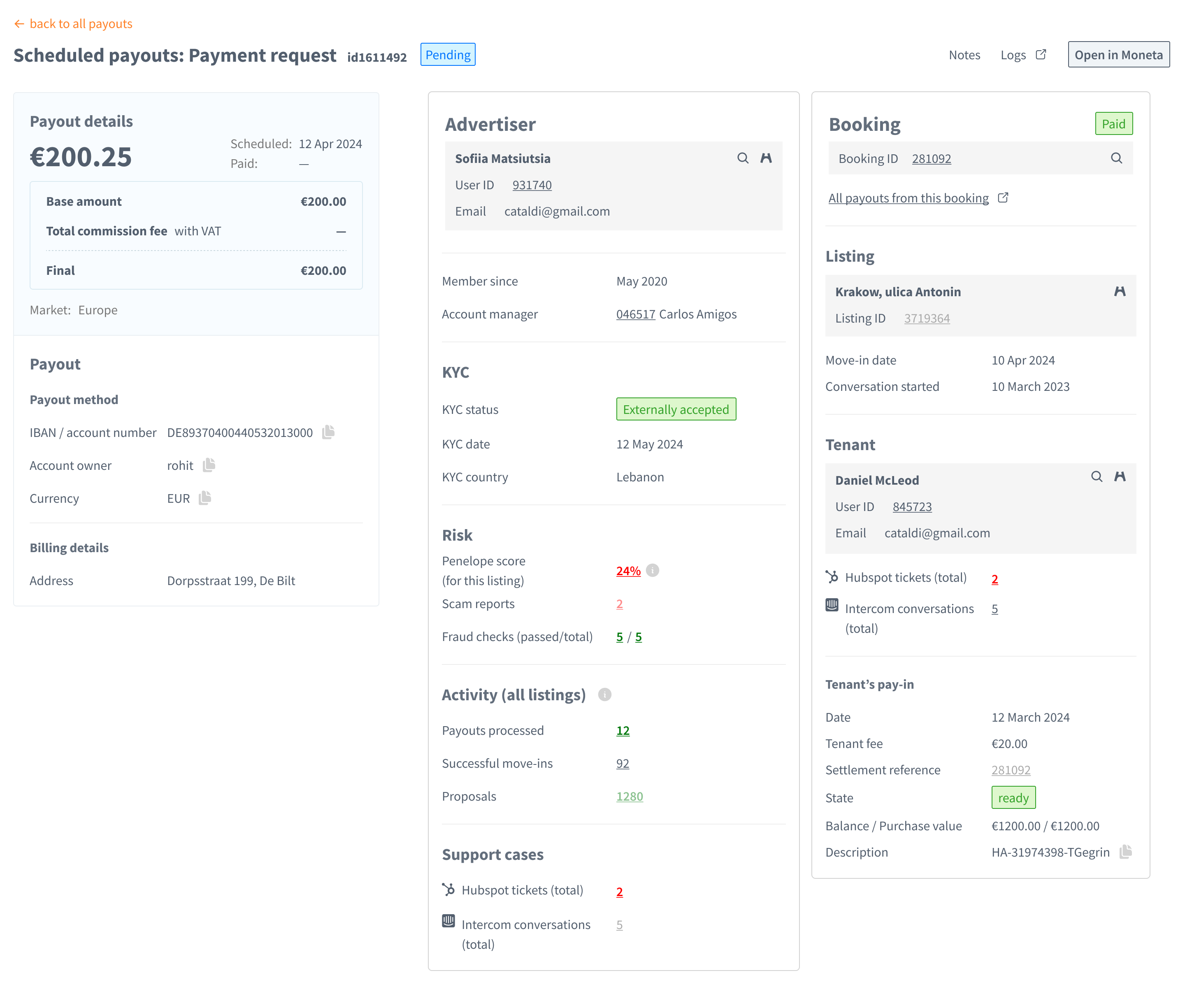
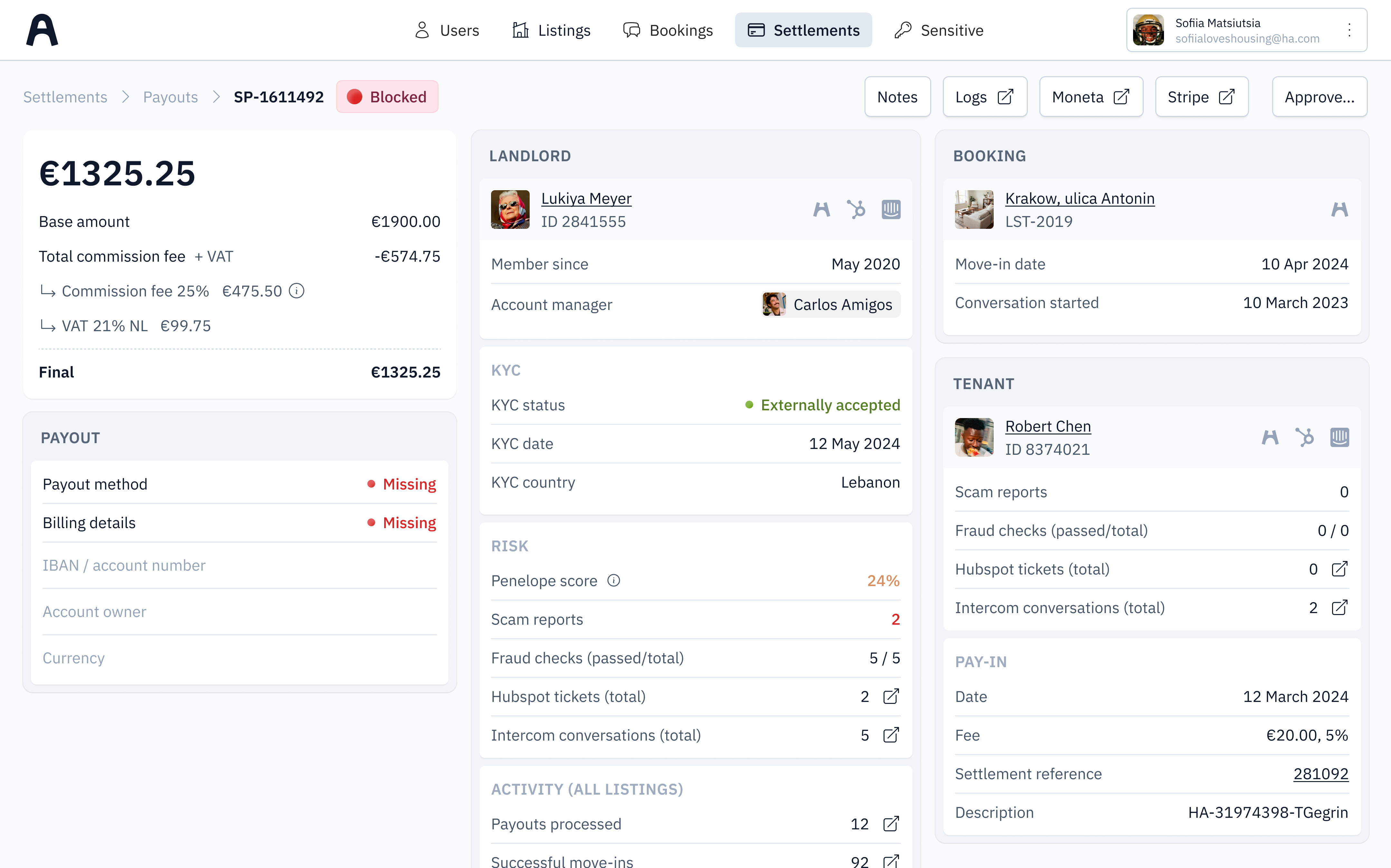
Payout review dashboard consolidating amount, landlord, booking, KYC, risk, tenant, and pay-in details.

Intro

Every two weeks, six members of the finance team paused their other work to process landlord payouts.

For every payout, they moved between a spreadsheet, internal tools, HousingAnywhere profiles, HubSpot and Stripe. The process required sustained concentration, created significant stress and left room for costly manual errors.

I initiated a project to consolidate the required information and gradually automate routine payout decisions, allowing the finance team to focus on exceptions.

Team

  • 1 Designer (me)
  • 1 Product Owner
  • 2 Developers (front+back)
  • 6 Finance team members
  • Spotted the opportunity through interviews and shadowing;
  • Mapped the existing payout workflow and its decision points;
  • Documented the checks performed by the finance team;
  • Validated requirements and thresholds with finance;
  • Partnered with the Product Owner and backend engineers to define the scope;
  • Designed the consolidated payout overview;
  • Helped define the transition from manual review to automated processing.

Problem

The finance team reviewed EVERY payout across multiple systems

I discovered the problem while interviewing and shadowing the finance team. I wanted to understand their typical working day, and the payout process immediately stood out.

Every two weeks, the team opened a Google spreadsheet containing landlords and bookings that might require a payout. For each case, they collected information from 6 places:

  1. Moneta for bank and payment information;
  2. The Admin Panel for landlord and booking details;
  3. The landlord’s public HousingAnywhere profile to assess reliability;
  4. HubSpot for unresolved support tickets;
  5. Stripe to create and send the payout.

High cognitive load

Problem #1

Human error prone flow

Problem #2

Process

Finding all the checks behind a payout decision

Interviewing and shadowing the finance team

I started by observing the process rather than assuming which parts could be automated.

I shadowed the finance team as they prepared payouts and asked them to explain what they checked, where they found the information and what could prevent a payout from being released.

This revealed that the work was more than transferring money. It was a risk-assessment process built from many small signals across different systems.
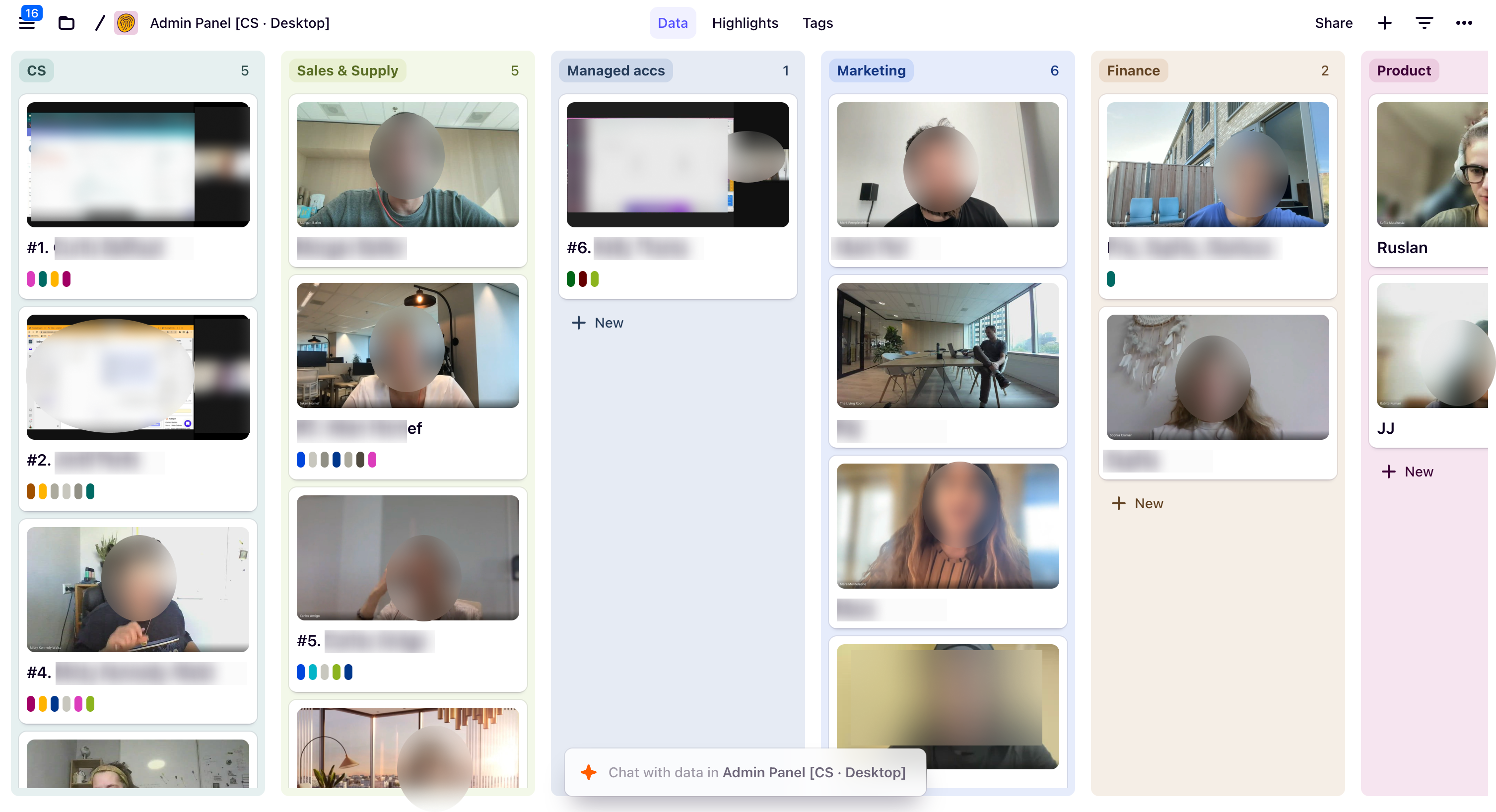
Interview database with notes from finance-team shadowing and interviews.
My internal database with all the interviews I conducted.

Documenting the complete workflow

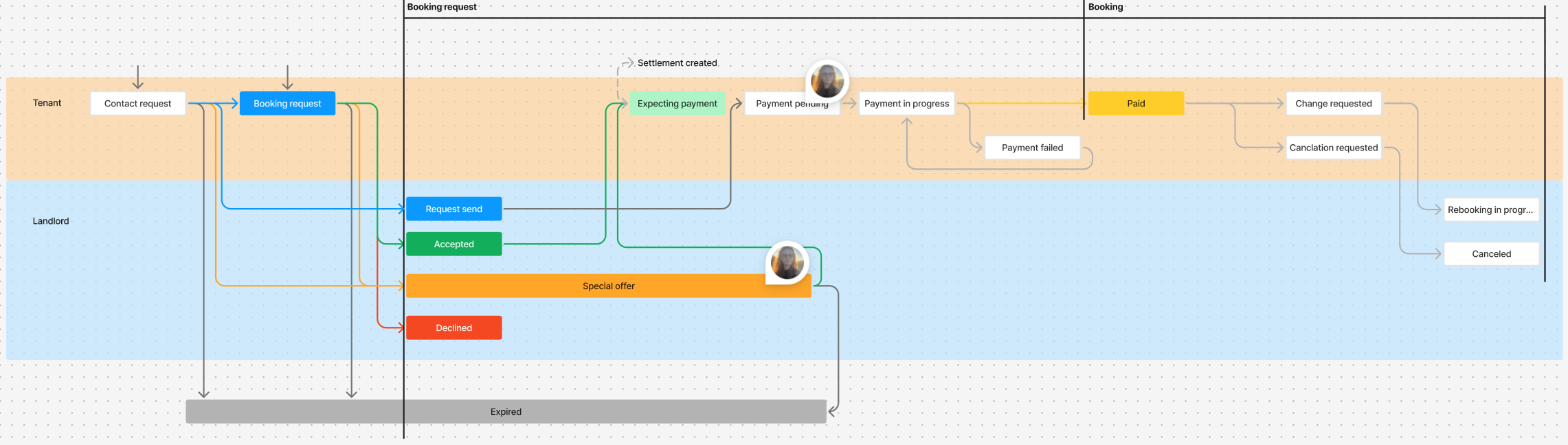
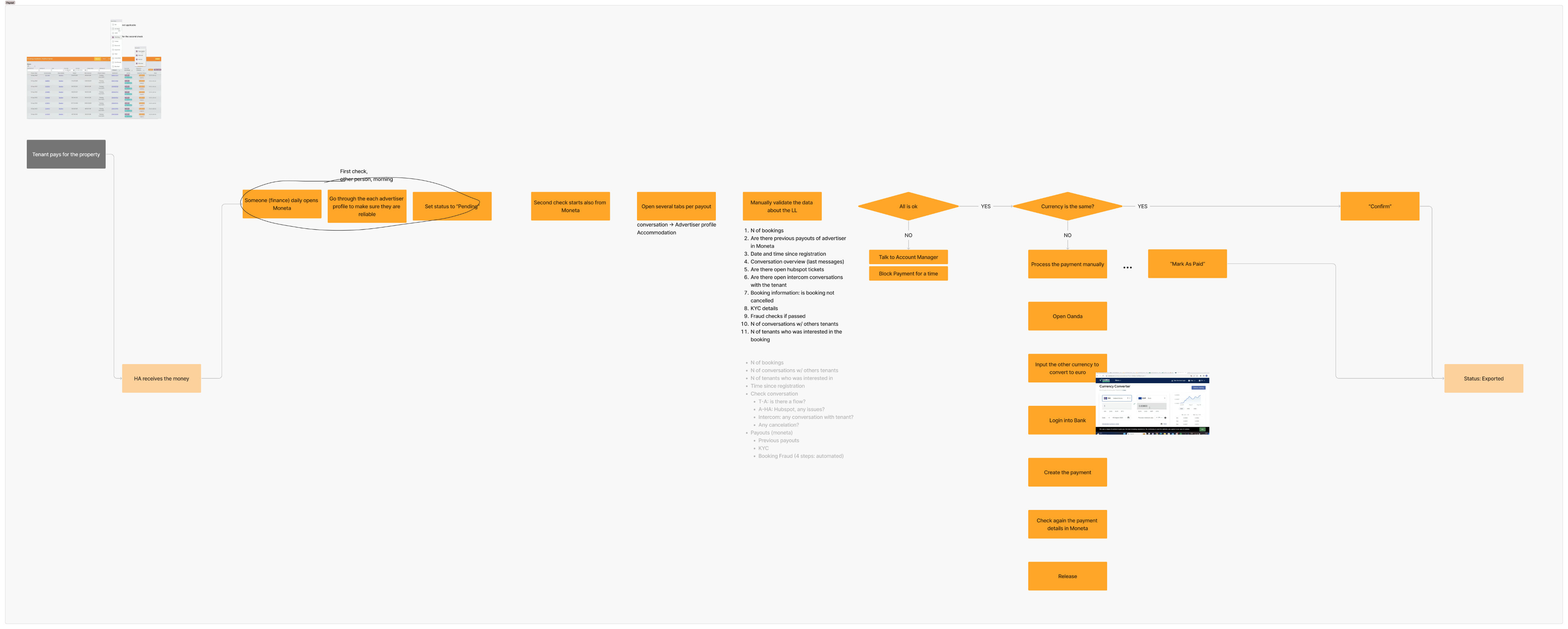
I mapped the process from the moment HousingAnywhere received the tenant’s payment to the moment the landlord’s payout was released.

The workflow included several decision points:

  • Does the landlord have a valid payout method?
  • Do the billing and bank details match?
  • Has the landlord completed the required KYC checks?
  • Are there fraud reports or suspicious booking signals?
  • Are there open support tickets or unresolved conversations?
  • Does the payout currency match the bank account?
  • Does the landlord or booking need manual review?

The map made the complexity visible to the wider team. It also helped us separate routine checks from decisions that still required finance expertise.

Workflow map tracing payout decisions from payment receipt to landlord release.
The map made the complexity visible to C-level
Map of booking and payout status dependencies.
Mapping the complexity of booking-payout statuses

Validating the data and decision rules

I iterated on the workflow with the finance team to verify that the checks, data sources and thresholds were correct.

This validation was essential. Missing even one important signal would force employees to leave the new system and search for it elsewhere, recreating the same cognitive load we were trying to remove.

I then worked with backend engineers and the Product Owner to understand which data could be collected in the Admin Panel and which checks could be automated reliably.

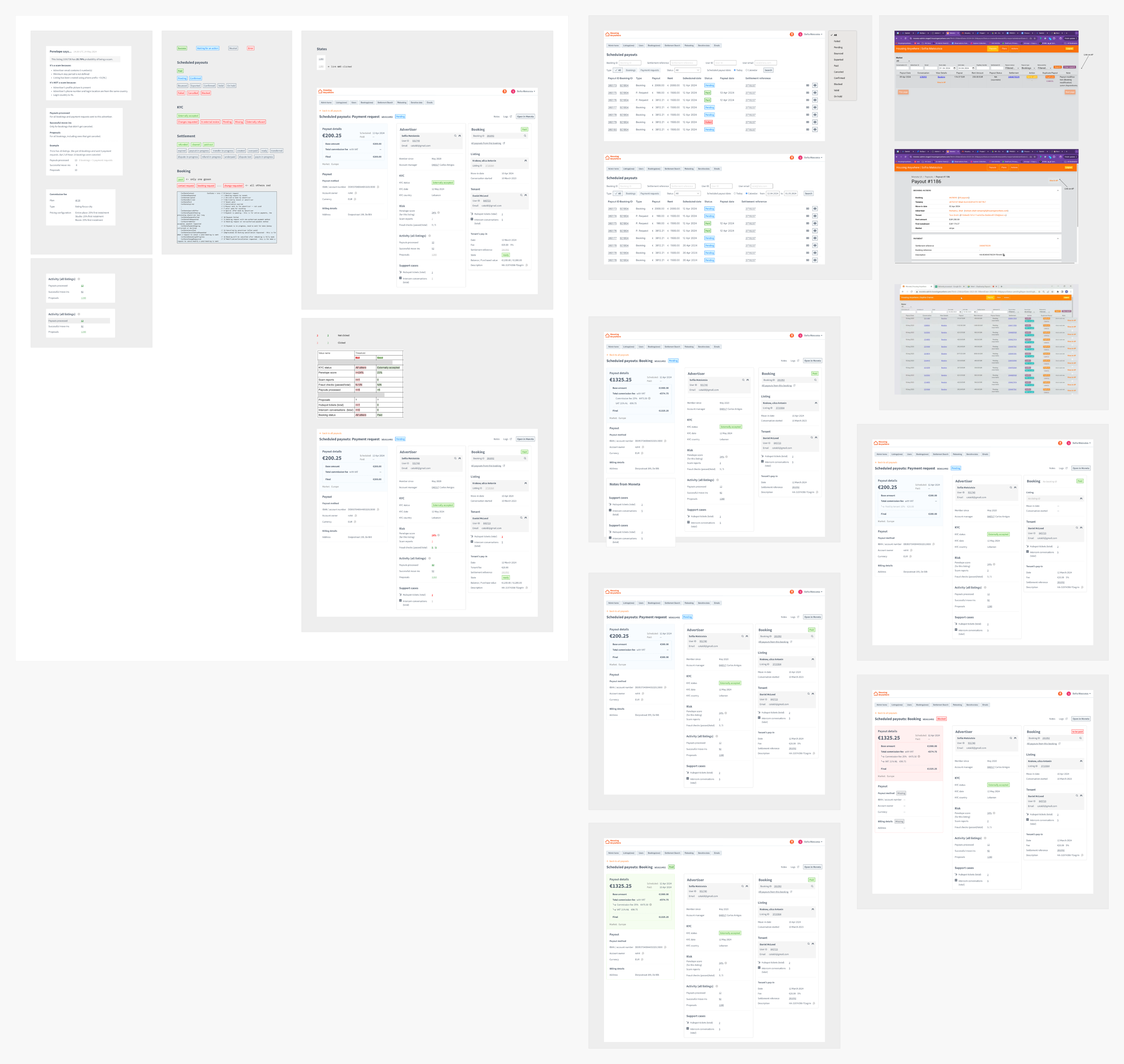
Design board documenting payout states, blocked cases, and exceptions.
Defining all states and edge cases

Solution

One payout overview made checks visible and actionable

Bringing the full payout context into one place

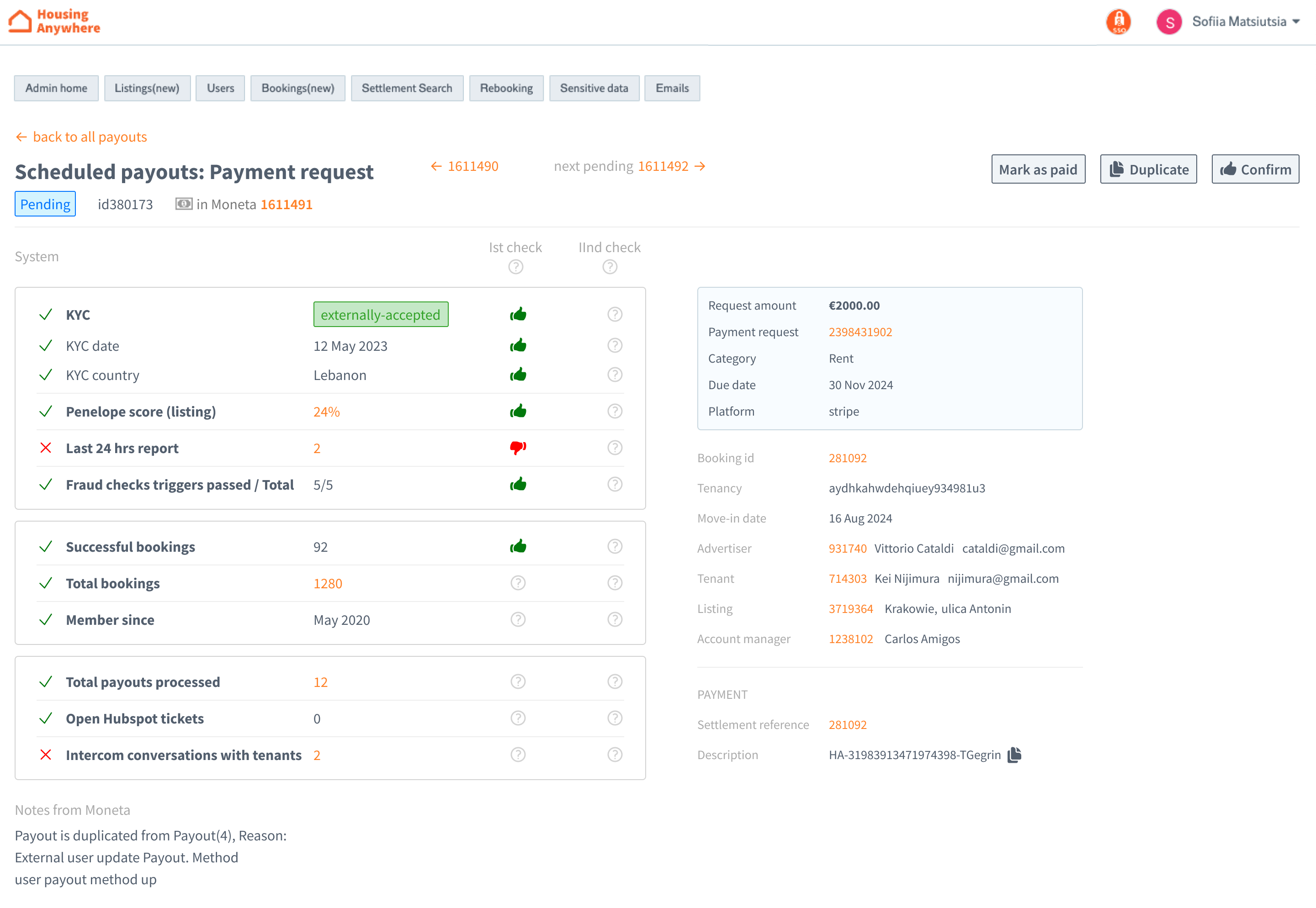
The first solution was a consolidated payout overview in the Admin Panel.

It brought together:

  • The payout amount, fees and final total;
  • The landlord’s details and account history;
  • Booking and tenant information;
  • KYC and payout-method status;
  • Fraud and risk signals;
  • Support tickets and conversations;
  • Pay-in and settlement details.

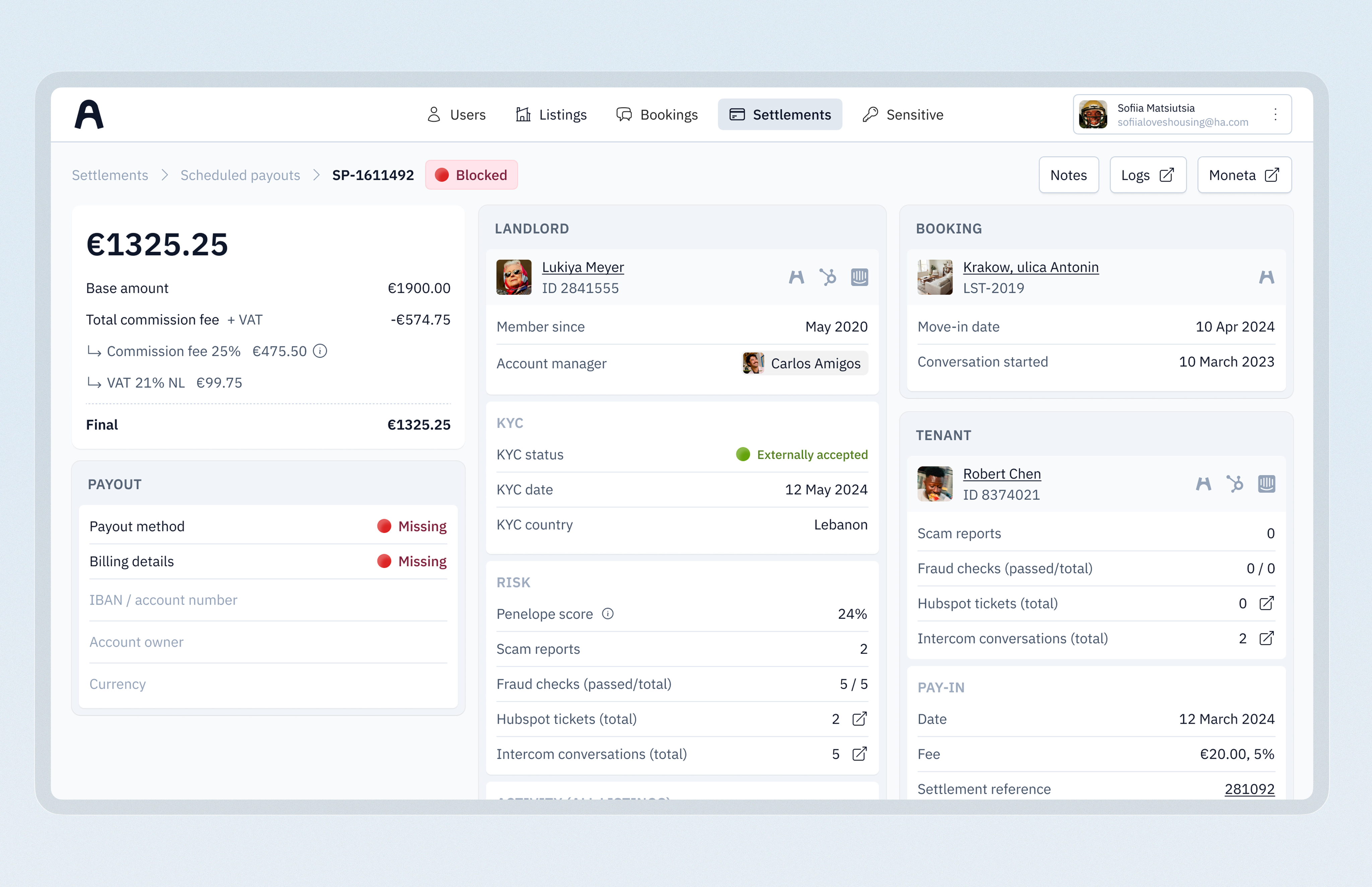
The interface used clear statuses to highlight missing information and values outside expected thresholds. Finance could assess the payout from one place and open the source systems only when a case required deeper investigation.

Explore all iterations:
Final payout-review screen showing a blocked payout with a missing payout method and billing details.

Building trust before full automation

The finance team was initially hesitant to let the system make payout decisions automatically. They were responsible for the money and wanted to remain in control. This led us to a staged approach:

First, the system collected the information and highlighted potential issues, while finance continued to approve payouts manually. This allowed the team to compare the system’s assessment with its own judgment.

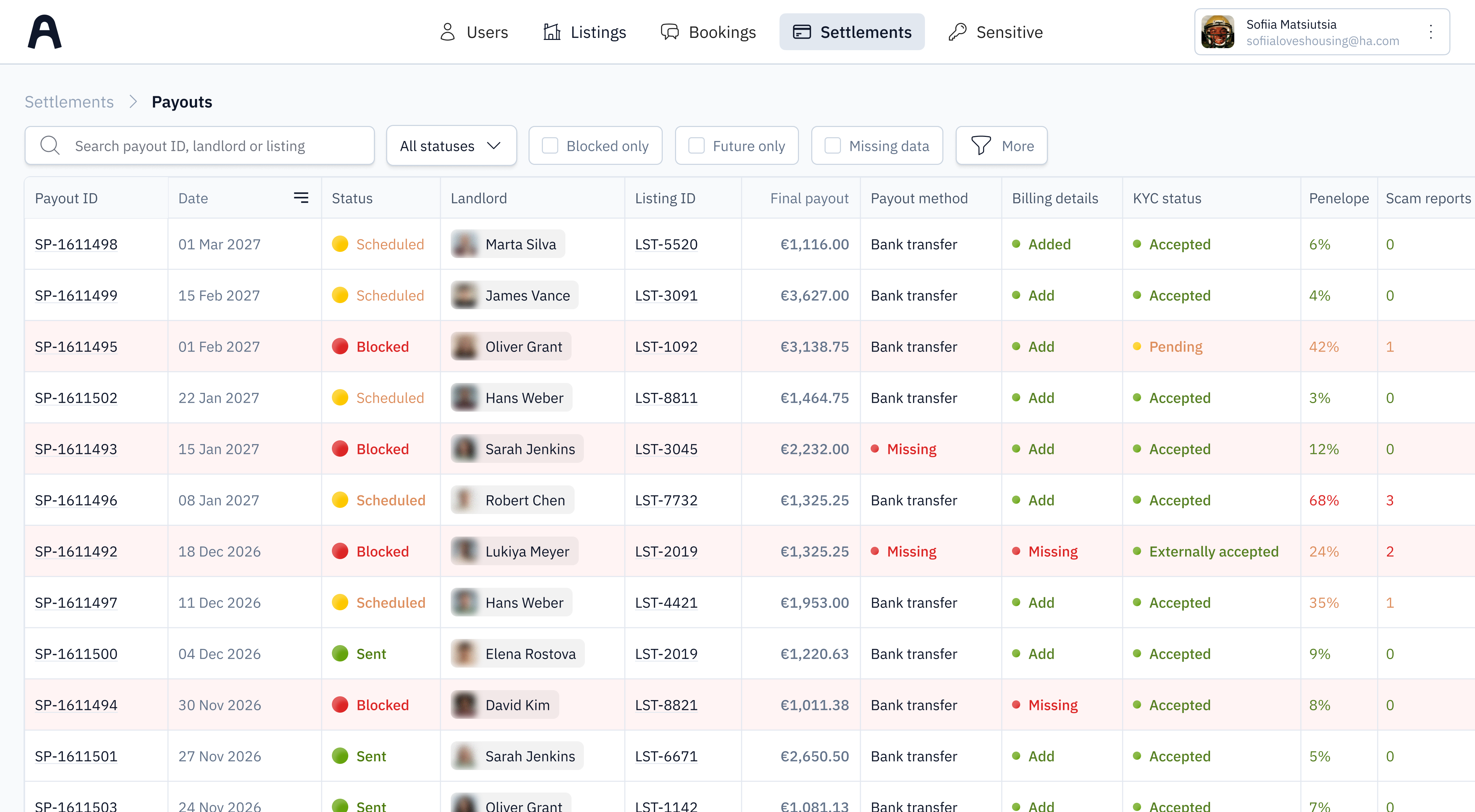
Once the checks had been validated, routine payouts could pass through automatically. Finance would only review cases marked as blocked, incomplete or unusual.

The project was completed before modern AI workflow tools became widely available. The rules, integrations and decision logic therefore had to be explicitly defined and implemented with backend engineers.

Payout search table showing routine and exceptional payouts across multiple statuses.
Next stage of automation: search for all payouts

Edge cases

Some payouts still required manual handling

Sending money to Icelandic bank accounts involved specific financial-system requirements. Until those requirements could be handled safely, the system routed these payouts back to the finance team for manual processing.

Exceptions like this were part of the workflow rather than failures of the automation. The design needed to explain why a payout was blocked and give finance enough information to decide what to do next.

Impact

Reduced the operational cost and risk

Staging the rollout let Finance validate automated checks before routine payouts moved through automatically. The result was 75% less manual work and 30 hours saved each week, while blocked, incomplete, and unusual cases remained available for review.

–75%

Reduced manual work

–30 hours

Saved per week

The project reinforced the value of observing internal teams in their real working environment. The automation opportunity only became visible when I saw the number of tools, checks and decisions involved in what initially appeared to be a simple operational task.

It also showed me that automation depends on trust. Giving finance visibility into the consolidated data and automated checks made the transition safer and helped the team build confidence in the system before handing over routine decisions.